
Sunvim Motor Sunvim Motor

7 Tips for Choosing a Permanent Magnet Synchronous Motor

Time:2026-09-17 Author:Isabella
0%

Choosing a Permanent Magnet Synchronous Motor requires more than comparing rated power and purchase price. The correct model must match the machine’s real operating conditions. Consider torque demand, speed range, duty cycle, ambient temperature, and available installation space. A motor driving a conveyor may need strong starting torque. A high-speed pump may demand different cooling and control characteristics. Small details matter.

This guide presents seven practical tips for making a dependable selection. It examines efficiency, rotor design, inverter compatibility, feedback devices, thermal management, protection ratings, and supplier support. Check the datasheet carefully. Rated performance can change with temperature, voltage, and operating speed. Ask for test conditions, not only attractive efficiency figures. Review factory inspection records, warranty terms, and service availability before approving the design. A supplier with application experience can often identify problems before installation.

No motor choice is perfect. A neat spreadsheet can still mislead. Real machines experience vibration, dust, overloads, and frequent starts. These conditions may expose weaknesses that laboratory ratings do not show. Leave enough thermal and torque margin, but avoid paying for capacity that the system never uses. Where possible, compare measured operating data with the manufacturer’s calculations. A short field trial may reveal noise, heating, or control instability. That evidence deserves attention. The best decision combines engineering analysis, practical experience, and honest review of uncertainty. It should improve efficiency without sacrificing reliability, maintainability, or long-term operating value.
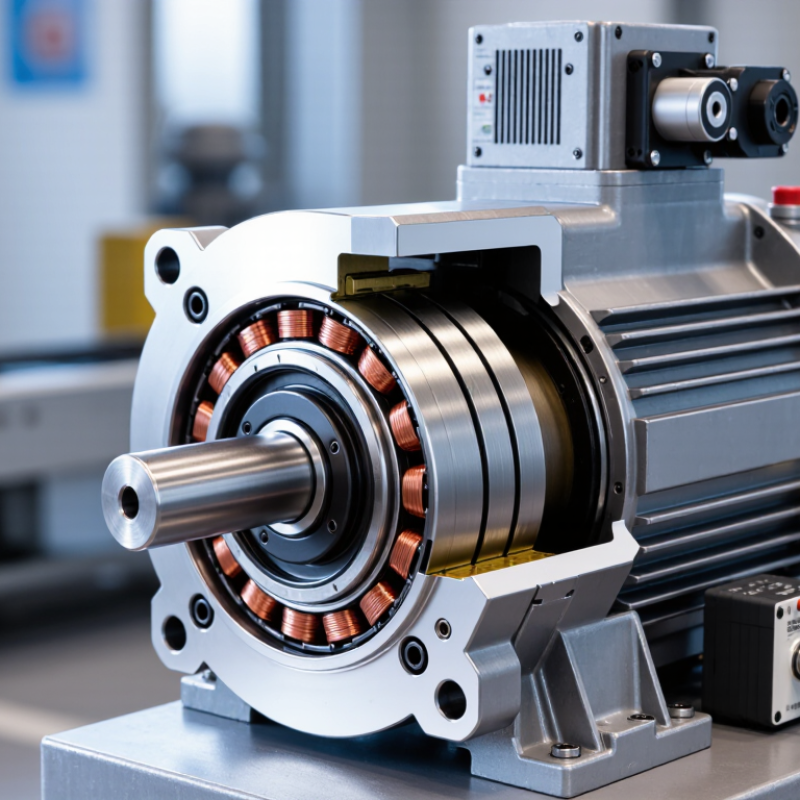
7 Tips for Choosing a Permanent Magnet Synchronous Motor

Define PMSM Ratings: Power, Torque, Speed, and Efficiency Above 90%

A permanent magnet synchronous motor (PMSM) should be selected by its complete rating, not its headline power. Power indicates work output, while torque determines starting force and load response.

Use P(kW) = T(N·m) × n(r/min) ÷ 9,550.
A 10 kW motor at 3,000 r/min produces about 31.8 N·m. That number changes sharply at lower speed.
Tip: Define the operating envelope.

Record continuous torque, peak torque, base speed, and maximum speed. Check the duty cycle, not only the rated point. A conveyor may need constant torque, while a pump often follows a variable-torque curve.

IEC 60034-2-1 provides standardized motor efficiency testing, but field performance can differ. Cable losses, inverter settings, cooling, and temperature matter. A neat datasheet can still mislead.

Tip: Verify efficiency above 90%.

The International Energy Agency reports that electric motor-driven systems consume roughly half of global electricity. Small efficiency gains therefore have practical value.

Request efficiency at 25%, 50%, 75%, and 100% load. A PMSM exceeding 90% at its rated point may fall below that level during light-load operation.

I would also inspect power factor and rotor temperature. This is often missed. Test the motor with its intended drive, load, and cooling arrangement. Compare measured input power with shaft output, and keep the test conditions documented.

Match Torque Density, Duty Cycle, and Speed Range to the Application

7 Tips for Choosing a Permanent Magnet Synchronous Motor

Match Torque Density, Duty Cycle, and Speed Range to the Application

Choosing a permanent magnet synchronous motor begins with the load, not the catalog. Measure shaft torque, including acceleration, friction, and peak disturbances. Torque density matters when space is tight, but compact motors often reject heat less easily. A smaller frame can fit beautifully and still fail during repeated starts. Use measured data whenever possible. A calculated estimate is only a starting point.

Map the duty cycle across a full shift. Record running torque, peak torque, idle time, and reversal frequency. Continuous duty requires steady thermal capacity. Intermittent duty may permit short overloads. Do not confuse rated torque with available torque at every speed. The drive and motor must be checked together. In field commissioning, I have seen acceptable bench results collapse under frequent low-speed loading. Low speed can reduce natural cooling. That detail is easy to miss.

Define the complete speed range, including acceleration and braking. At high speed, back EMF, mechanical stress, and voltage limits become decisive. At low speed, encoder feedback and external cooling may need more attention. Check inertia matching before selecting a high-torque rotor. Large inertia can make the control loop feel sluggish. Request thermal curves, overload duration, insulation limits, and efficiency data. Compare those figures with actual operating conditions. Leave margin, but avoid excessive oversizing. Oversizing raises cost and may reduce light-load efficiency. The selection may need revision after site testing. That is normal engineering.

Choosing a Permanent Magnet Synchronous Motor

Compare representative torque density, duty cycle, and maximum operating speed requirements across common applications. Select a motor whose continuous torque, thermal rating, and speed range match the real operating profile rather than only the peak requirement.

The values are representative engineering reference points for typical PMSM applications. Higher torque density helps reduce motor size and mass, while a high duty-cycle rating supports continuous operation. The selected motor should also provide sufficient overspeed margin and thermal capacity for the required speed range.

Evaluate Magnets, Temperature Limits, and Demagnetization Risk

Choosing a permanent magnet synchronous motor starts with its magnet system, not its brochure efficiency. Ask which magnet material is used and how its coercivity changes with temperature. A motor beside a 90°C heat source needs different protection than one running in a cool, ventilated cabinet. Check the rated winding temperature, rotor temperature, and allowable thermal rise separately. They are not interchangeable.

During evaluation, request demagnetization curves at the intended operating temperature. A magnet can appear safe at 25°C yet lose usable flux during repeated overloads. Review peak current, acceleration time, braking events, and blocked-rotor conditions. These short events may heat the rotor more than continuous operation. Ask for test data, not only nominal torque figures. Thermal sensors near the stator may miss rotor heating. That gap matters.

In field work, I would compare the motor’s temperature limit with the real duty cycle, including poor ventilation and frequent starts. A safety margin of 10 to 20°C can be useful, but its basis should be documented. I have seen estimates treated as test results. That is a costly shortcut. Select a design with monitored temperature, clear overload limits, and evidence from representative testing.

Select Inverter Control, Encoder Feedback, and IEC 60034 Compatibility

7 Tips for Choosing a Permanent Magnet Synchronous Motor

Tip 1: Match the inverter to the motor’s control method. A field-oriented inverter provides accurate torque and speed control. Sensorless control can reduce wiring, but low-speed positioning may suffer. U.S. DOE’s 2021 Motor Systems Market Assessment reports that motor systems use about 68% of industrial electricity. Small control losses can become expensive over long shifts.

Tip 2: Specify encoder feedback early. An incremental encoder suits speed regulation and basic synchronization. An absolute encoder is safer for machines needing position recovery after power loss. Check resolution, maximum speed, cable length, shielding, and thermal resistance. I have seen excellent motors underperform because encoder grounding was overlooked. That detail is easy to miss. Tip 3: Verify IEC 60034 compatibility, not just efficiency claims. IEC 60034-30-1 defines motor efficiency classes, while IEC 60034-2-1 addresses loss measurement. Confirm the rated output, duty cycle, temperature rise, insulation system, and inverter supply conditions. A motor labeled IE5 may still disappoint if operated outside its rated load range. Standards help, but application data remains decisive.

Tip 4: Examine braking and regeneration requirements. Tip 5: Check bearing protection at high switching frequencies. Tip 6: Compare full-load and partial-load efficiency. The IEA’s Energy Efficiency 2023 report identifies industry as consuming 37% of global final energy in 2022. That makes operating profiles more important than brochure ratings. My own preference is conservative selection, although oversizing can also reduce efficiency and feedback sensitivity. Test the complete motor, inverter, and encoder combination before approving production.

Verify IP Rating, Cooling Method, Service Life, and Total Cost

7 Tips for Choosing a Permanent Magnet Synchronous Motor

Start with the installation, not the catalog. IEC 60529 defines IP protection against solids and water, not corrosion. An IP65 motor resists dust and water jets, but it is not designed for immersion. IP67 may survive temporary immersion under stated test conditions. My first selection mistake was treating the IP code as a complete environmental guarantee. Salt, chemicals, and washdown frequency still require separate checks. Record the actual enclosure exposure.

Cooling deserves equal attention. IEC 60034-6 identifies cooling arrangements through IC codes, which affect temperature rise and allowable output. A sealed motor can protect internal parts, yet it may trap heat near a slow-moving shaft. Check ambient temperature, mounting position, airflow, and inverter operation. A smaller motor may look efficient, but continuous overload can shorten insulation life. Sometimes, I still choose more thermal margin than the spreadsheet requests.

Service life depends on bearings, insulation, load cycles, and maintenance quality. Ask for rated bearing life, insulation class, temperature-rise data, and duty-cycle limits. The U.S. Department of Energy’s Motor Systems Tip Sheets indicate that energy can represent roughly 95% of motor life-cycle cost, while purchase cost is only a small fraction. The International Energy Agency has reported that motor-driven systems consume about 45% of global electricity. Compare efficiency across the real operating profile, not only the nameplate point. Include inverter losses, cooling power, spares, downtime, and disposal. Total cost is rarely tidy. That is the honest part.

FAQS

Why should I evaluate more than a PMSM’s rated power?

Power shows work output, but torque controls starting force and load response. A 10 kW motor at 3,000 r/min produces about 31.8 N·m. At lower speed, torque can change sharply.

Which operating details should I define before selecting a motor?

Record continuous torque, peak torque, base speed, maximum speed, and duty cycle. A conveyor may need constant torque. A pump often needs variable torque.

Can a motor above 90% efficiency always save energy?

No. Efficiency may exceed 90% at full load but drop during light-load operation. Request results at 25%, 50%, 75%, and 100% load. Small losses matter during long shifts.

How should motor efficiency be tested?

Test the complete motor, inverter, load, and cooling arrangement. Compare electrical input power with shaft output. Document temperature, speed, load, and control settings. A neat datasheet can still mislead.

Why are magnet temperature limits important?

Magnet performance can decline as temperature rises. A motor beside a 90°C heat source needs stronger thermal protection. Check winding temperature, rotor temperature, and thermal rise separately. They are not interchangeable.

How can I reduce demagnetization risk?

Request demagnetization data at the intended operating temperature. Review peak current, acceleration, braking, and blocked-rotor conditions. These brief events may heat the rotor significantly. This is often missed.

Which feedback system suits a PMSM?

An incremental encoder supports speed regulation and basic synchronization. An absolute encoder helps recover position after power loss. Check resolution, speed limit, cable length, shielding, and thermal resistance.

Is sensorless inverter control suitable for every application?

No. It can reduce wiring, but low-speed positioning may become less accurate. Match the inverter’s control method to the machine’s real motion requirements. I would test this carefully.

What protection details should be checked before production approval?

Examine braking, regeneration, bearing protection, switching frequency, insulation, and cooling. Confirm overload limits and temperature monitoring. Test the full motor, inverter, and encoder combination. Estimates are not test results.

Conclusion

Choosing the right Permanent Magnet Synchronous Motor begins with understanding its key ratings, including power, torque, operating speed, and efficiency. A suitable motor should provide more than 90% efficiency under expected working conditions while matching the application’s torque density, duty cycle, acceleration needs, and speed range. These factors help ensure reliable performance without unnecessary energy use or oversizing.

It is also important to evaluate the magnet material, allowable temperature limits, and potential demagnetization risks in the intended environment. Check whether the inverter supports the required control strategy, and confirm encoder feedback options and compatibility with IEC 60034 requirements. Finally, review the motor’s IP rating, cooling method, expected service life, maintenance needs, and total cost of ownership. A balanced assessment of performance, protection, integration, and long-term value will lead to a more dependable motor selection.

Isabella

Isabella

Isabella is a dedicated marketing professional with a sharp focus on driving brand growth and engagement through strategic content creation. With an extensive background in digital marketing, she combines her passion for storytelling with her keen understanding of industry trends to deliver......