
Sunvim Motor
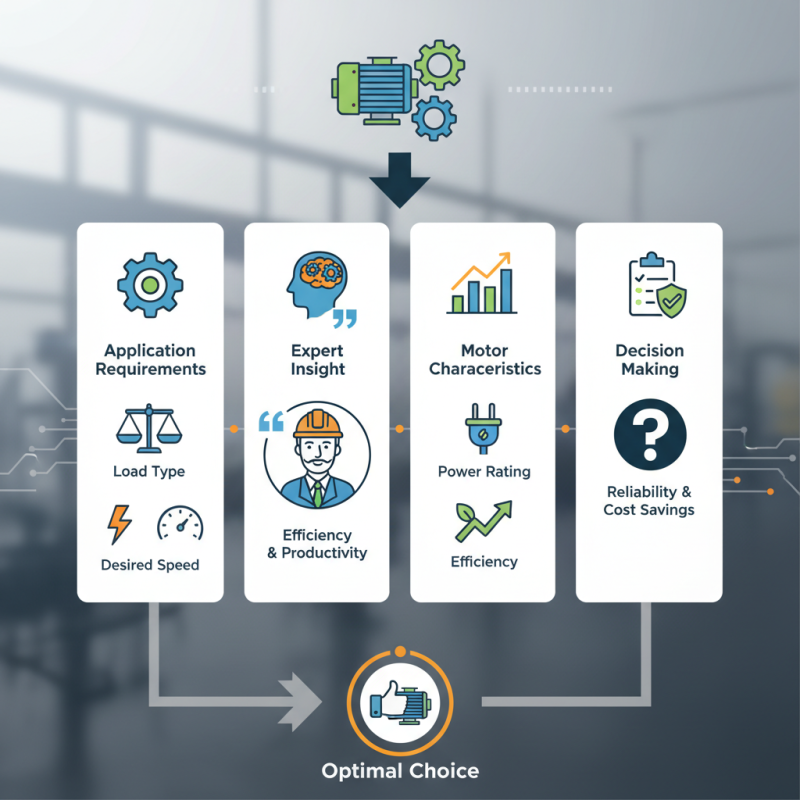
Choosing the right Three Phase Electric Motor is crucial for efficiency and performance. Expert engineer John Smith, known for his work in industrial motors, states, “Selecting the proper motor can significantly impact productivity.” This insight emphasizes the need for thoughtful decision-making.
Understanding the specific requirements of your application is key. Factors such as load type, voltage, and desired speed play a vital role in selection. Each motor has distinct characteristics that suit different environments. A mismatch can lead to inefficiency and increased costs.
Consider the power rating and efficiency when choosing a Three Phase Electric Motor. Not all motors offer the same benefits for all applications. Reflecting on your unique needs will guide you toward the best choice. In the end, the right motor not only enhances productivity but also ensures reliability in operations.
Understanding three phase electric motors is essential for selecting the right one. These motors are widely used in industrial applications. They operate on three alternating currents, producing a rotating magnetic field. This design enables them to deliver smooth and efficient power.
Three phase motors have some advantages over single-phase motors. They generally offer higher efficiency and better torque. However, choosing the right motor can be confusing. You need to consider factors like horsepower requirements and load characteristics. Each application can demand different specifications.
Installation can also present challenges. Proper alignment and mounting are crucial for optimal performance. It's not uncommon for businesses to overlook these details. This oversight can lead to mechanical issues down the line. A deeper understanding of these motors can help in common troubleshooting, enhancing reliability and durability.
When selecting a three-phase electric motor, several factors are critical. Efficiency plays a key role. According to the International Electrotechnical Commission, motors can consume up to 70% of energy in industrial applications. Selecting a motor with high efficiency ratings contributes to significant energy savings and can reduce operational costs by up to 30%.
Consider the required torque and speed. The torque must match the application demands. The speed rating should align with system requirements. It's essential to avoid under- or over-specifying these parameters to prevent performance issues. Many facilities face this challenge; ensuring accurate specifications can mitigate this.
Tips: Always consult standard motor selection tables. They provide guidance on matching motors to load characteristics. Utilize online calculators to validate your selection.
Another factor is environmental conditions. Motors may operate in harsh environments. Consider factors such as temperature, humidity, and exposure to chemicals. It's advisable to look for motors rated for these conditions to avoid premature failure. According to a recent study, 30% of motor failures stem from unsuitable operating conditions. This insight emphasizes careful consideration of the installation environment when making a choice.
Choosing the right three-phase electric motor begins with understanding power and torque requirements. These factors are crucial for optimal performance in various applications. According to the National Electrical Manufacturers Association (NEMA), selecting a motor with insufficient power can lead to overheating and operational inefficiencies.
To determine the required power, consider the load your motor will handle. For example, if a conveyor system requires 5 horsepower, an electric motor must match or exceed this output. Torque requirements vary widely across applications, from low-torque tasks like fans to high-torque needs in mills and crushers. Notably, a torque analysis can often reveal shortcomings in initial assessments, potentially leading to equipment failure.
Efficiency ratings, often expressed in percentage, can guide decisions. A motor operating at 90% efficiency may offer significant energy savings over time compared to one at 70%. However, a detailed analysis is essential to align motor selection with application needs. Manufacturers' specifications could provide insight, yet these must be viewed critically. Industry reports suggest that approximately 30% of electric motors operate below optimal conditions. This presents an opportunity for improvement in many facilities, urging a careful reevaluation of motor specifications and performance metrics.
When selecting a three-phase electric motor, evaluating
efficiency ratings and operational costs is crucial.
Efficiency ratings define how well a motor converts electrical energy into mechanical power.
Motors with higher efficiency ratings typically consume less energy, leading to
reduced operational costs. This means that while the
initial purchase price may be higher, the long-term savings can be substantial.
Additionally, consider the operational environment. Factors like
temperature, humidity, and load conditions
affect performance. A motor that operates efficiently under one set of conditions might
not perform as well in another. It’s worth noting that not all efficiency ratings are
created equal; look for standardized testing methods for accurate comparisons.
Sometimes, the quest for the most efficient motor can overshadow other critical factors
such as maintenance demands and initial costs.
A higher upfront cost may deter some users, but it’s essential to calculate the overall
return on investment. Reflecting on these elements
will lead to a more informed choice, ultimately ensuring that the selected motor meets
both operational needs and budget constraints effectively.
When selecting a three-phase electric motor, size, mounting, and environmental factors are critical. A well-chosen motor can boost efficiency and extend equipment life. According to industry data, motors typically consume 70% of industrial electricity. Thus, understanding specifications is vital.
For sizing, measure the load your motor needs to handle. Motors should ideally operate at 75%-90% of their rated capacity for efficiency. Underloading may lead to overheating, while overloading can cause premature failure. Factors like the service factor and duty cycle also influence the motor's longevity.
Mounting type affects performance and safety. Common options include foot-mounted and flange-mounted designs. Ensure the chosen method aligns with your installation space and vibration control needs. Environmental concerns such as dust and moisture are crucial too. IP ratings indicate protection levels, so choose accordingly to prevent failures.
**Tip:** Always cross-reference motor specifications with application requirements to avoid installation errors.
**Tip:** Use vibration analysis tools during setup to monitor performance.
Relying on robust data rather than assumptions ensures a reliable motor choice. Addressing these factors minimizes operational downtime and enhances productivity.
: Assess the load your motor will handle. Match or exceed the horsepower requirement for optimal performance.
Torque analysis reveals potential shortcomings. It helps avoid equipment failure caused by miscalculations in torque needs.
Efficiency ratings show how well a motor converts energy. Higher ratings mean lower energy consumption and savings over time.
Factors like temperature and humidity impact motor performance. A motor efficient in one condition may perform poorly in another.
Consider both the purchase price and long-term savings. Calculate the return on investment to make informed choices.
Proper sizing ensures motors operate within 75%-90% of their rated capacity. This prevents overheating and premature failure.
Common types include foot-mounted and flange-mounted designs. Choose based on installation space and vibration control needs.
IP ratings indicate protection levels against dust and moisture. Choose a motor that meets environmental concerns to avoid failures.
Sometimes, efficiency may overshadow maintenance costs or initial prices. Reflecting on all factors leads to smarter choices.
Cross-reference motor specifications with application requirements. Use tools like vibration analysis for monitoring during setup.
When choosing the right Three Phase Electric Motor, it is essential to understand the fundamentals of these motors, including their operational principles and applications. Key factors to consider involve determining the required power and torque based on the specific needs of your application. Additionally, evaluating the efficiency ratings and operational costs can significantly impact long-term performance and budgeting.
Furthermore, aspects such as size, mounting options, and environmental requirements must also be assessed to ensure optimal compatibility and functionality. By carefully analyzing these elements, you can select a Three Phase Electric Motor that meets your operational demands and contributes to the overall efficiency of your system.
