
Sunvim Motor
Choosing the right Squirrel Cage Induction Motor begins with the machine’s real working conditions, not its catalog appearance. A motor may look suitable on paper yet overheat beside a dusty conveyor or struggle during repeated starts. Load torque, starting frequency, speed, voltage, enclosure, and ambient temperature must be examined together. Small details matter. A 30-kilowatt motor running eight hours daily needs different protection from one operating briefly in a clean workshop.
Austin Hughes, a respected author on electric motors and drives, describes the induction motor as “the workhorse of industry.” That phrase explains its value, but it should not encourage careless selection. A workhorse still needs the correct load, cooling, and maintenance. Check the required rated power, service factor, efficiency class, pole count, and full-load current. Then compare starting torque with the driven equipment’s resistance. Pumps, fans, compressors, and conveyors rarely behave alike.
A neat checklist can still mislead.
Practical experience also exposes choices that specifications hide. A motor installed near a furnace may require better insulation and temperature planning. A conveyor with frequent acceleration may need a higher starting capability or a variable-frequency drive. Consider shaft alignment, bearing loads, cable length, and available protection equipment. These points are sometimes overlooked, including by experienced buyers under schedule pressure. Manufacturer data, IEC standards, test certificates, and qualified engineering review provide stronger evidence than price alone. The best Squirrel Cage Induction Motor is not always the largest or most efficient model. It is the one that reliably matches the mechanical duty, electrical supply, environment, and long-term operating cost.
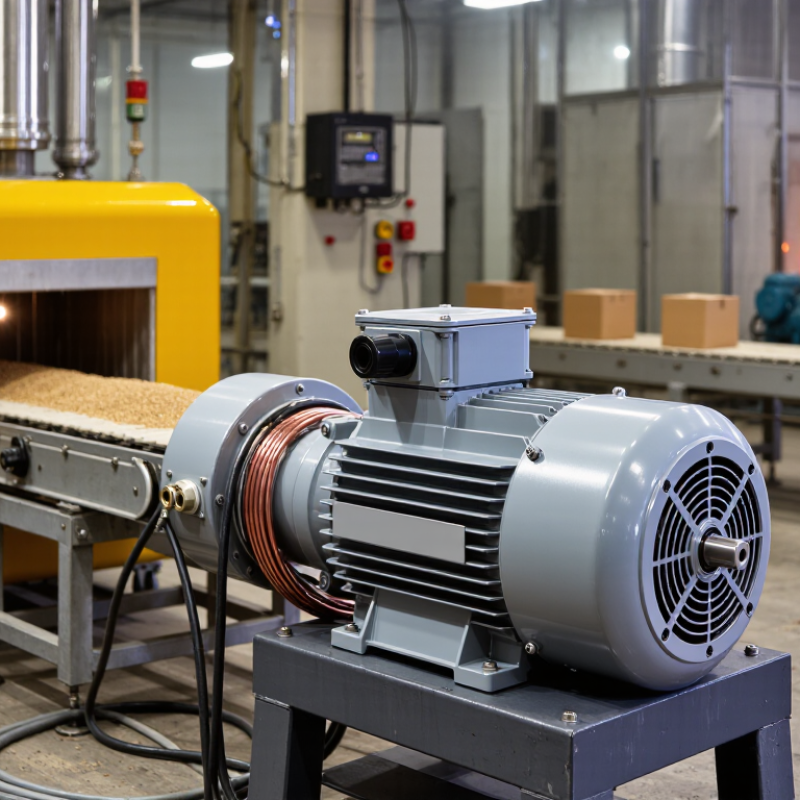
Choosing the right squirrel cage induction motor starts with its operating conditions, not its nameplate power. Record voltage, frequency, ambient temperature, altitude, enclosure requirements, and installation location. A dusty workshop needs different protection than a clean indoor pump room.
Define the load profile carefully. Identify running hours, starting frequency, acceleration time, speed changes, and peak torque. IEC 60034-1 classifies duties such as continuous S1 and intermittent S3. Selecting S1 for a frequently cycling conveyor may increase heat stress and shorten insulation life. The U.S. Department of Energy reports that motor-driven equipment can represent about 70% of industrial electricity use. The IEA has also estimated that electric motor systems consume roughly half of global electricity. Small efficiency losses become expensive over years. Measure reality. Do not guess.
Tips: Build a simple duty record for one full production cycle. Note current during startup, normal load, and overload events. Compare these readings with the motor’s rated current and thermal limits. Check whether the driven machine needs high breakaway torque. Pumps and fans often behave differently from crushers or loaded conveyors. Consider service factor carefully; it is not permission for continuous overload. A practical selection can still be imperfect because production conditions change. Recheck the choice after installation, especially if starts feel harsh or temperatures rise unexpectedly. Use IEC 60034 guidance and qualified electrical personnel when verifying protection, cabling, and thermal performance.
Match the motor to the driven equipment, not just its nameplate power. A conveyor moving 2,000 kilograms needs enough continuous power for its normal load. It also needs extra torque during startup. Torque comes first. Check the machine’s starting torque, running torque, and load inertia before selecting the motor. A motor that runs smoothly may still stall when a full conveyor starts.
Speed must match the transmission system. At 50 Hz, a four-pole motor commonly runs near 1,470 revolutions per minute. At 60 Hz, it often runs near 1,760 revolutions per minute. Actual speed changes with slip and load. Confirm the required shaft speed, pulley ratio, and gearbox input speed. A small speed error can create excessive belt wear, vibration, or poor pump flow. Measure the load.
In practical equipment reviews, engineers compare the motor’s rated power with real operating conditions. Consider voltage, frequency, duty cycle, ambient temperature, altitude, and enclosure requirements. For variable-speed operation, verify cooling and low-speed torque performance. Do not choose a much larger motor automatically. Oversizing can increase purchase cost, starting current, and light-load losses. Undersizing is worse. It may overheat after repeated starts. I would also recheck the calculation when the load data seems unusually clean; field measurements are often incomplete. A brief current and speed survey can reveal problems that a catalog table misses.
How to Choose the Right Squirrel Cage Induction Motor
The enclosure should match the air, not just the motor room. For dusty factories, an IP55 enclosure usually resists dust ingress and water jets under IEC 60529. IP66 offers stronger sealing, but it may retain heat more easily. This trade-off matters. In outdoor areas, rain, washdown spray, salt, and condensation require careful evaluation. The International Energy Agency reports that motor-driven systems consume about 46% of global electricity, so small efficiency losses can become significant operating costs.
Insulation class also deserves practical attention. Under IEC 60034-1, Class F insulation permits a winding temperature limit of 155°C, while Class H allows 180°C. However, selecting Class H alone does not guarantee longer service life. Ambient temperature, altitude, overload, and cooling airflow remain important. A motor running near its thermal limit every day may fail earlier than expected. The United States Department of Energy’s motor-system guidance emphasizes that correct sizing and operating conditions often deliver greater savings than efficiency labels alone.
Protection class should reflect the real hazard. High humidity, conductive dust, and frequent starts can justify stronger protection and additional monitoring. Yet overspecification increases purchase cost and may reduce cooling performance. A common mistake is choosing the highest IP rating without checking heat dissipation. That choice looks safe. It may not be. Record actual temperature, dust levels, and starting frequency before final selection.
Select the motor by matching its enclosure, insulation system, and protection class to the installation environment. The chart shows recognized insulation thermal ceilings and the remaining temperature margin at a 40°C ambient reference.
| Typical IP Code | Solid-Object Protection | Water Protection | Typical Selection Consideration |
|---|---|---|---|
| IP44 | Protected against solid objects greater than 1 mm | Protected against splashing water | Clean, sheltered indoor installations |
| IP54 | Dust-protected | Protected against water splashes | General industrial areas with moderate dust or moisture |
| IP55 | Dust-protected | Protected against water jets | Industrial locations requiring routine washdown resistance |
| IP65 | Dust-tight | Protected against water jets | Dust-heavy or exposed industrial environments |
Selection note: Insulation thermal classes are defined by IEC 60085. Class B, F, and H have thermal ceilings of 130°C, 155°C, and 180°C respectively. The chart calculates the theoretical temperature margin above a 40°C ambient reference; actual motor temperature rise, loading, altitude, duty cycle, cooling method, and service factor must also be checked. IP classifications describe enclosure protection under IEC 60529 and should be selected according to the site’s dust, water, and washdown conditions.
Evaluate Efficiency, Starting Performance, and Speed Control Options
Efficiency should match the motor’s real operating pattern. A high-efficiency motor may save energy during long production shifts. However, it may not justify its cost on a lightly used machine. Check rated load, service factor, ambient temperature, and expected running hours. Measure actual current where possible, rather than trusting estimates alone. Small errors become expensive over time.
Starting performance deserves close attention. A loaded conveyor may need high starting torque, while a fan usually starts more gently. Compare locked-rotor current, starting torque, and acceleration time with the driven equipment. Excessive current can cause voltage dips and nuisance trips. A soft starter can reduce mechanical shock, but it may limit starting torque. That trade-off is easy to overlook.
Speed control also affects motor selection. A variable frequency drive offers smooth adjustment, energy savings, and controlled acceleration. Confirm that the motor supports inverter operation, especially at low speed. Reduced cooling can cause overheating when the shaft turns slowly. External cooling may be necessary. Not always.
For constant-speed duties, direct online starting can be simple and reliable. Yet its current surge may stress older electrical systems. Review the supply capacity, duty cycle, and braking needs with a qualified engineer. Following applicable IEC 60034 requirements improves consistency, but site conditions still matter. I would not choose a motor from efficiency data alone. Real measurements, installation limits, and imperfect operating habits often change the better choice.
Installation verification should begin before energizing the squirrel cage induction motor. Check the rated voltage, frequency, duty cycle, enclosure, and expected starting load against the application. A motor running near its design load usually operates more efficiently than an oversized unit. The U.S. Department of Energy’s 2021 Motor Systems Market Assessment reports that motor systems consume about 68% of electricity used in U.S. manufacturing. Small efficiency losses can therefore become expensive.
Alignment deserves close attention. Inspect soft foot, shaft coupling, foundation bolts, and cable termination. A 0.05 mm soft-foot error may create avoidable vibration and bearing stress. Record insulation resistance, phase resistance, winding temperature, vibration, and no-load current before commissioning. Use ISO 20816 guidance for vibration evaluation and IEC 60034 requirements for motor performance. Keep these records; memory is unreliable.
Maintenance planning must match the environment, not only the calendar. Dust, moisture, washdown water, and frequent starts can shorten service life. Establish baseline readings, then trend bearing temperature and vibration during normal production. Grease intervals should follow the motor maker’s instructions and actual operating conditions. Over-greasing is a common mistake. It can raise bearing temperature. Technicians should also verify cooling airflow, terminal tightness, and overload protection during inspections. A maintenance checklist helps, but it does not replace judgment. Unexpected noise, rising current, or a small temperature increase may deserve investigation before failure becomes obvious.
Record voltage, frequency, ambient temperature, altitude, installation location, and enclosure needs. Include dust, moisture, and washdown exposure.
It shows running hours, starts, acceleration time, speed changes, and peak torque. A motor for a loaded conveyor differs from one for a fan.
Record one complete production cycle. Measure startup current, normal current, overload events, and motor temperature.
Repeated starts may increase heat stress. Insulation life can shorten, although the exact result depends on cooling and load.
No. It provides limited operating margin. Continuous overloading can raise temperature and reduce service life.
An IP55 enclosure commonly resists dust ingress and water jets. More demanding areas may require stronger sealing after site evaluation.
No. Stronger sealing can restrict cooling and retain heat. Safety without thermal checking may create another failure risk.
Check rain, salt, condensation, humidity, washdown spray, and temperature changes. Outdoor conditions are rarely as simple as they look.
Class F permits a winding temperature limit of 155°C. Class H permits 180°C, but it does not prevent poor cooling or overload damage.
Recheck it if starts feel harsh, temperatures rise, or production changes. The original selection may be reasonable, but reality can disagree.
Choosing the right Squirrel Cage Induction Motor begins with a clear understanding of the operating environment and duty requirements. Consider the expected load pattern, running hours, ambient temperature, humidity, dust, altitude, and available power supply. The motor’s rated power, torque, and speed should closely match the driven equipment to avoid poor performance, excessive energy use, or premature wear. Starting torque and acceleration requirements are especially important for conveyors, pumps, compressors, and other variable-load applications.
The motor’s enclosure, insulation system, and protection class must suit the installation conditions and provide adequate resistance to heat, moisture, and contaminants. Efficiency should be evaluated together with starting current, starting performance, and the need for speed control through suitable drive equipment. Finally, confirm that the mounting arrangement, ventilation, wiring, accessibility, and maintenance plan are appropriate. Reviewing bearing care, alignment, vibration, inspection intervals, and expected service life will help ensure dependable operation and long-term reliability.
