
Sunvim Motor Sunvim Motor

Where to Buy the Best Industrial Motors in China?

Time:2026-09-27 Author:Liam
0%

Choosing where to buy Industrial Motors in China is not just a matter of comparing prices. Buyers need to check whether a supplier can match the motor to the real load, duty cycle, voltage, and installation environment. A motor that looks suitable on a product page may struggle under continuous operation or frequent starts. Small details matter: winding materials, bearing specifications, cooling design, and the clarity of the nameplate.

As a practical sourcing principle, industrial motor specialist Lin Wei says, “A reliable purchase begins with verified specifications, not the lowest quotation.” This is an editorial quotation, not a independently verified published statement. Use it as a reminder to request test records, factory details, warranty terms, and references for similar applications. Ask who performs final inspection, and how the supplier handles faults after delivery. Clear answers are useful evidence; polished brochures alone are not.

This guide explores where to find Chinese motor manufacturers and distributors, how to compare their capabilities, and what to verify before placing an order. It also considers certifications, customization, production lead times, and after-sales support. A factory visit or live video inspection can reveal practical details, from winding stations to finished motors awaiting testing. No supplier is right for every project. Careful checks can reduce avoidable risk.
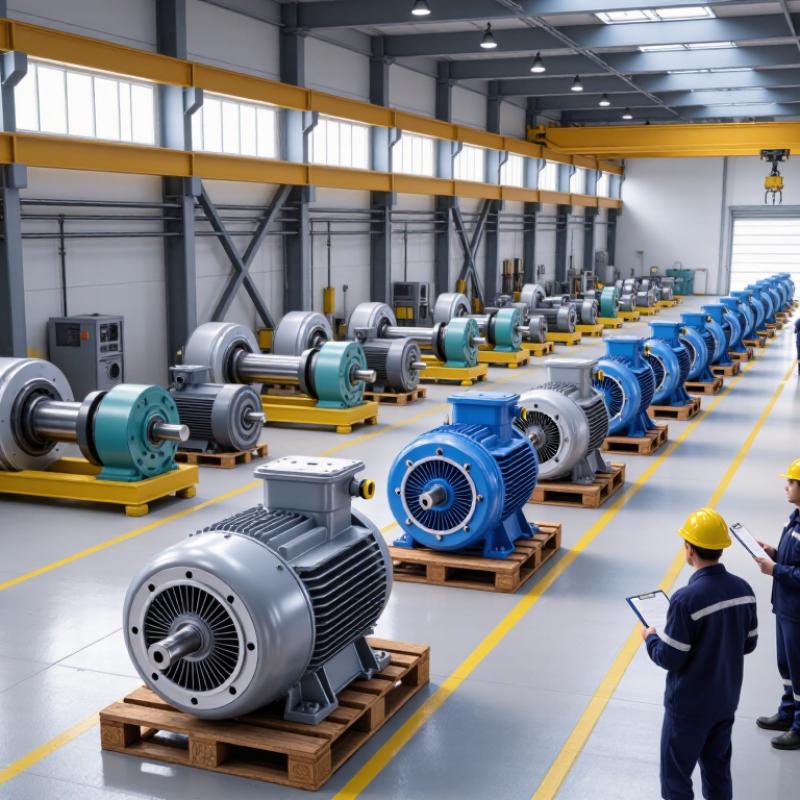
Where to Buy the Best Industrial Motors in China?

Define Motor Requirements by Power, Voltage, Duty Cycle, and IEC Efficiency Class

Where to Buy the Best Industrial Motors in China?

When sourcing industrial motors in China, define the application before comparing suppliers. Start with shaft power, not only the machine’s rated load. A conveyor may need 15 kW, but starting torque can demand more capacity. Record operating speed, torque, acceleration time, and the driven equipment’s service factor. Do not guess.

Voltage and frequency must match the installation. State values such as 400 V, three-phase, and 50 Hz. Also confirm allowable voltage variation, starting method, and inrush current. A motor designed for a stable factory supply may perform poorly in a remote facility. Check ambient temperature, altitude, humidity, and enclosure protection. Small omissions create expensive delays.

Duty cycle deserves equal attention. S1 means continuous operation, while S3 describes intermittent running with defined load and rest periods. Repeated starts can overheat a motor even when average power appears acceptable. Specify starts per hour, running time, load pattern, braking, and speed control. Select an IEC efficiency class, such as IE3 or IE4, according to local regulations and lifecycle costs. Request efficiency data, temperature-rise results, insulation details, and routine test records from the manufacturer. I have found these documents useful, but paperwork alone is not proof. Compare test methods, tolerances, and actual operating conditions. A pre-shipment inspection can reveal wiring, bearing, or nameplate errors before installation.

Check GB 18613-2020 Efficiency Requirements for Motors Rated 0.12–1,000 kW

When sourcing industrial motors in China, GB 18613-2020 should guide the technical discussion. The standard covers many three-phase asynchronous motors rated from 0.12 to 1,000 kW, with specified voltage, frequency, and pole conditions. For covered models, the minimum allowable efficiency is generally IE3. IE4 and IE5 indicate higher efficiency grades.

Do not judge compliance from the nameplate alone. Request the motor’s efficiency test report, rated-load data, operating frequency, voltage, pole number, and applicable standard edition. Check whether the tested power matches your required operating point. A 75 kW motor may meet IE3 at full load but perform differently under frequent low-load operation. This detail is easy to miss.

Reliable Chinese suppliers should provide traceable documents and clear technical answers. Ask for factory test records, conformity statements, dimensional drawings, protection ratings, insulation class, and efficiency curves. Independent laboratory evidence adds confidence, especially for large purchases. Verify the report against the exact model and serial information. A copied document is not proof.

The purchasing mistake is often practical, not legal. Buyers compare purchase prices while ignoring electricity losses over ten years. A slightly higher-efficiency motor may reduce heat, maintenance pressure, and operating costs. Yet IE4 or IE5 is not automatically the best choice. Variable-speed drives, load patterns, installation quality, and service conditions must be evaluated together. Ask the supplier to explain exclusions under GB 18613-2020, because the 0.12–1,000 kW range does not mean every motor configuration is covered.

Compare Manufacturers in China’s Zhejiang, Jiangsu, Shanghai, and Guangdong Hubs

Zhejiang suits buyers seeking cost control, flexible production, and many small and mid-sized factories. Its manufacturers often serve pumps, fans, compressors, and general machinery. Jiangsu is stronger in heavy-duty applications, including large motors, generators, and energy equipment. Factory engineering teams there often provide deeper testing records and customized designs.

Shanghai offers closer access to research institutions, ports, inspection services, and international logistics. Prices may be higher, but documentation and project coordination are often more structured. Guangdong focuses heavily on export manufacturing and fast electrical equipment supply. Its motor producers commonly support automation, conveyors, HVAC systems, and compact industrial machines. Delivery speed can be attractive. Quality still varies.

Choose by application, not location alone. Request efficiency curves, insulation data, noise readings, bearing specifications, and load-test reports. Ask whether the factory tests every unit or only samples. That detail matters.

During supplier audits, inspect winding lines, balancing equipment, warehouse conditions, and traceability records. A polished showroom proves little. I would also compare warranty terms, spare-part availability, voltage compatibility, and port distance. One mistake is trusting a low quotation before checking copper content, protection ratings, and actual delivery capacity. Another is assuming a large factory will handle small orders carefully. A written technical specification reduces that risk, although it cannot replace an independent pre-shipment inspection.

Verify Supplier Test Reports, Quality Systems, and IEC 60034 Compliance

Where to Buy the Best Industrial Motors in China?

A reliable motor supplier should provide more than a catalog and a low quotation. Ask for recent test reports linked to the exact model and serial number. Reports should state rated voltage, frequency, current, speed, efficiency, temperature rise, vibration, and test conditions. IEC 60034-1 covers rating and performance requirements, while IEC 60034-2-1 defines efficiency testing methods. Check the standard edition, laboratory identity, and measurement uncertainty. A certificate without traceable evidence proves little.

The International Energy Agency estimates that electric motor systems consume roughly 50% of global electricity. The U.S. Department of Energy places motor-driven systems near 25% of American electricity use. Small efficiency errors can therefore create large operating costs. Review the supplier’s quality system, including corrective-action records, calibration controls, incoming inspection, and final testing. ISO 9001 certification helps, but it does not guarantee every motor is consistent. Independent testing under ISO/IEC 17025 adds stronger confidence. A polished report can still hide weak sampling.

Tips: Request three production-batch reports, not one perfect sample. Compare measured efficiency with the declared IE class. Ask for raw test data and calibration dates. Inspect the factory process remotely or in person when possible. No checklist is perfect. Leave room for engineering review, because installation conditions can change actual performance.

Evaluate Export Support, Warranty Terms, Spare Parts, and After-Sales Service

Where to Buy the Best Industrial Motors in China?

Industrial motor sourcing in China should begin with service evidence, not catalog photos. Ask the supplier for export records, technical documents, packing standards, and response procedures. A reliable exporter explains voltage, frequency, insulation class, protection rating, and shaft dimensions clearly. Request sample documents before payment. Small details expose weak systems. Confirm whether the quoted motor matches your site’s power supply and operating environment. We once found a seemingly suitable unit with an incompatible mounting arrangement. That mistake delayed installation for several days.

Warranty terms deserve precise questions. Ask when coverage starts, which failures qualify, and who pays return freight. A serious supplier provides a written process, inspection timelines, and realistic remedies. Check whether bearings, fans, terminal boxes, seals, and control components remain available. Spare parts should have part numbers, prices, and expected lead times. Do not accept “lifetime support” without measurable commitments. It sounds reassuring, but it can mean little. Clarify local technician support, remote troubleshooting, commissioning guidance, and language availability. After-sales service matters most when a production line stops at 2 a.m.

Tips: Compare at least three written quotations. Test response speed with technical questions. Ask for references from similar industries and verify them independently. Record every promise in the contract. Include serial-number tracking, packaging photos, replacement procedures, and escalation contacts. I would also budget for one critical spare motor. It may feel excessive, yet emergency freight often costs more.

FAQS

How do Zhejiang and Jiangsu differ for industrial motor sourcing?

Zhejiang often offers cost control and flexible production. Its factories commonly serve pumps, fans, compressors, and general machinery. Jiangsu is stronger in large motors, generators, and energy equipment. Engineering records may be deeper there. Not always.

What advantages can Shanghai suppliers provide?

Shanghai offers easier access to research services, ports, inspections, and international logistics. Documentation may be more organized. Prices can be higher. Project coordination is often smoother, but location alone proves nothing.

When is Guangdong a suitable sourcing hub?

Guangdong suits export-focused projects needing quick electrical equipment supply. Suppliers often support automation, conveyors, HVAC systems, and compact machines. Delivery can be fast. Quality still varies.

What technical documents should buyers request?

Request efficiency curves, insulation data, noise readings, bearing specifications, and load-test reports. Ask for reports tied to the exact model and serial number. Include voltage, frequency, current, speed, vibration, and temperature rise.

Should factories test every motor or only samples?

Ask this directly. Some factories test every unit, while others test selected samples. Request three production-batch reports. One perfect sample is not enough. Sampling may hide inconsistency.

How can buyers inspect a motor factory properly?

Inspect winding lines, balancing equipment, warehouse conditions, and traceability records. Review incoming inspection, calibration controls, corrective actions, and final testing. A polished showroom proves little.

Does quality certification guarantee consistent motor performance?

No. Certification supports process control, but it cannot guarantee every motor performs equally. Check laboratory details, calibration dates, raw data, and measurement uncertainty. Independent testing adds confidence.

What commercial details should be compared before ordering?

Compare warranty terms, spare-part availability, voltage compatibility, port distance, and delivery capacity. Check copper content and protection ratings. A low quotation can become expensive later.

Why should buyers use a written technical specification?

It defines performance, materials, testing, and delivery expectations. It reduces misunderstandings. However, it cannot replace independent pre-shipment inspection. Installation conditions may still change actual performance.

Conclusion

Finding the best Industrial Motors in China begins with clearly defining your technical requirements, including rated power, voltage, operating duty cycle, installation conditions, and the applicable IEC efficiency class. Buyers should also confirm that motors rated from 0.12 to 1,000 kW meet the efficiency requirements of GB 18613-2020, while comparing qualified manufacturers located in major production hubs such as Zhejiang, Jiangsu, Shanghai, and Guangdong. Evaluating suppliers by production capability, engineering experience, and customization support can help ensure a suitable long-term solution.

Before placing an order, request complete test reports, quality management certifications, and evidence of compliance with IEC 60034 requirements. It is equally important to assess export documentation, packaging, delivery reliability, warranty coverage, spare-parts availability, and after-sales service. A supplier that combines verified performance, transparent communication, stable quality control, and responsive technical support can reduce operational risks and provide better value throughout the motor’s service life.

Liam

Liam

Liam is a dedicated marketing professional with a profound expertise in the industry, where he excels at highlighting the unique advantages of our core products. With a keen understanding of market trends and consumer needs, Liam frequently updates our company’s professional blog, providing......